Why Formal Work Makes a Difference
February 26, 2026 | Navar Maarri
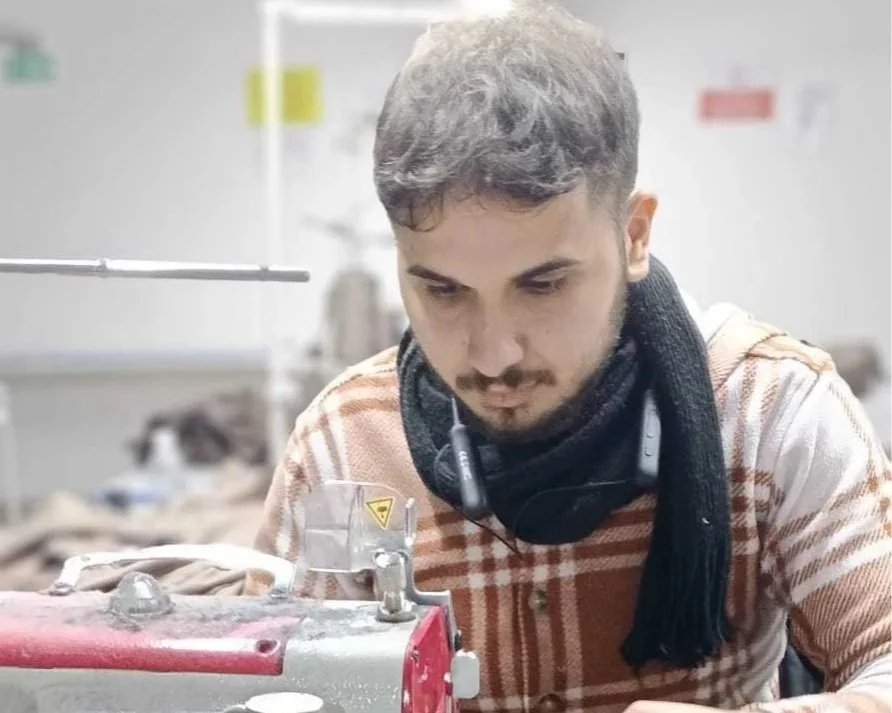
Hussam Batş was just 14 years old when he left Aleppo in 2016. His family’s home had been bombed, and the surrounding buildings were destroyed, making it impossible for them to stay. Like many others, they fled to Turkiye, carrying with them uncertainty about what the future would hold.
In Türkiye, Hussam gradually learned tailoring and built his skills through work in workshops. He stayed in the sector for nearly ten years; however, most of this work was informal and without social security, exposing him to instability and loss of rights.
During these years, Hussam faced repeated challenges. In one workshop, he worked for four months without receiving his salary on time and was eventually paid only after waiting several more months and accepting installments. Over the course of a decade, he worked in more than ten different workplaces. The absence of formal contracts and social security made long-term stability impossible and forced him to keep moving from one job to another.
Today, Hussam is married and has one child. He lives in Adana with his family and is the sole breadwinner for a household of six, including his wife, child, parents, and two younger siblings under 18. One of the hardest aspects of informal work for him was the lack of health insurance, especially when it came to protecting his family. Without coverage, medical care is costly, and workers have no entitlement to paid leave, public holidays, or compensation in the event of a work-related accident.
At the time, Hussam was looking for a job when he learned about the employment support provided by the Resilient Employment and Socio-Economic Development in Earthquake-Affected Regions of Türkiye (RE-SEED) project. He registered for the support, and through this process, Building Markets connected him with a company looking for workers with his skills. He was accepted into a position that matched his experience. This is the first time I have worked formally,” Hussam says..“For me, being able to include my wife, child, and parents under health insurance has been a turning point for my family’s well-being.”
Hussam explains that stability is now the most important factor in his life. He recently heard about a worker who received compensation after a workplace accident because he was formally employed, which reinforced his belief in the importance of formal work. He advises other workers to seek formal employment opportunities, even if informal jobs appear financially attractive in the short term, and expresses his appreciation for the project, which supports and encourages businesses to offer formal employment, enabling him to move from years of instability into a secure and dignified working life.
This support is provided under the “Resilient Employment and Socio-Economic Development in Earthquake-Affected Regions of Türkiye (RE-SEED)” project is co-funded by the European Union and the German Federal Ministry for Economic Cooperation and Development and implemented by Deutsche Gesellschaft für Internationale Zusammenarbeit (GIZ) GmbH in cooperation with the Union of Municipalities of Türkiye and Building Markets.