The Roots of a Business: How Tuğba Turned Years of Planting into a formal Olive Oil Company
The Roots of a Business: How Tuğba Turned Years of Planting into a formal Olive Oil Company
September 25, 2026 | Navar Maarri
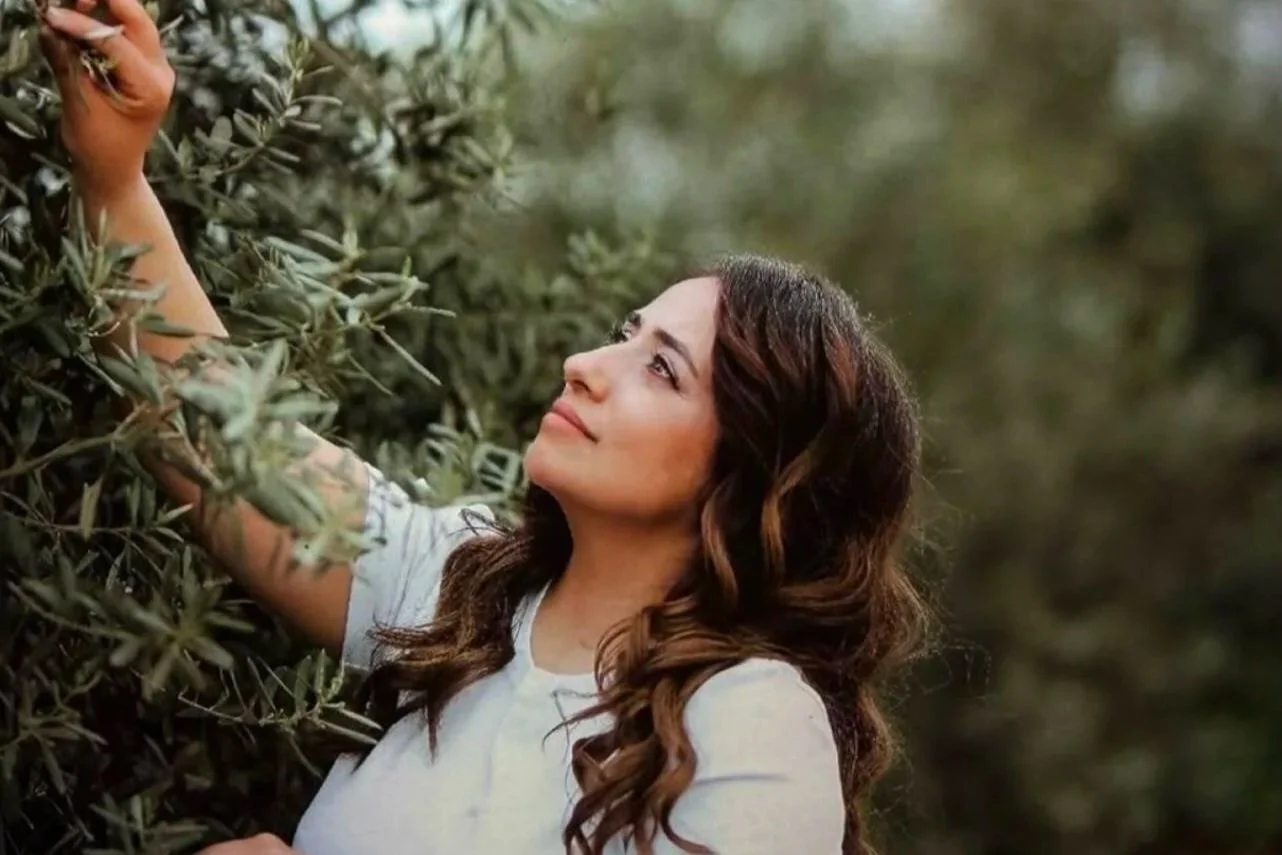
In 2015, when Tuğba Bozgeyik first saw a piece of unused family land in her husband’s village near Gaziantep, she began imagining what she could grow in its rich red soil.
Today, olive trees grow there, producing the olive oil that Tuğba hopes will one day reach customers far beyond Türkiye. Her business is one of the women-owned businesses supported through RUHSAT under the RE-SEED Project, which helps informal businesses in earthquake-affected communities in Türkiye complete their registration and take the next steps toward growth.
Soon after they married, Tuğba and her husband decided to turn the empty land into a farm. They started by planting 400 olive trees and 350 pistachio trees, doing much of the planting, watering and care themselves. With a limited budget, they worked with what they had and continued adding new trees over the years.
The work was demanding. Tuğba continued to care for the trees and work on the farm over the years. Today, she is a mother of two, and the farm that began with a few hundred young trees is now home to nearly 2,500 olive and pistachio trees.
While the pistachio trees still need time to mature, the olive trees began producing. For around five years, Tuğba and her family have been making olive oil and selling it in tins to friends, relatives and people they know.
They harvest the olives while they are still green, rather than waiting for them to fully ripen and produce more oil. They get less oil this way, but for Tuğba, the quality is worth it. She says their olive oil does not exceed 0.2 acidity. They try to keep the same connection with nature in everything they do on the farm, making use of what nature already provides. They use animal manure instead of chemical fertilizers, drip irrigation to avoid wasting water.
But while production was growing, the business itself remained informal. Without a registered business, Tuğba mostly sold within her own circle. The audience was small, and sometimes what she earned only covered the costs. With the expenses of running the farm and a limited budget, taking on the additional costs of formal registration was difficult.
The 2023 earthquakes made things even harder. Tuğba and her family were affected in Gaziantep, where homes around them were destroyed and they had to leave their own home for more than a month.
Through the RE-SEED Project, Tuğba connected with Building Markets and received RUHSAT support to register her business. The support covered the steps and costs she had struggled to take on herself, including chamber registration, electronic signature setup, fire-safety requirements, accounting support and her first three months of Bağ-Kur payments.
Finally, after years of waiting, I was able to officially register my business in April 2026 with support from RE-SEED, under the name ‘Bozgeyik Zeytinliği Gıda Tarım Hayvancılık Sanayi Ticaret Limited Şirketi,’” Tuğba says.
And formal registration opened doors almost immediately. Before, Tuğba had been hesitant to promote her olive oil online because she was unable to issue invoices. Now she can sell under her company name, receive payments through a business account and send customers an invoice with every order.
She has also started reaching beyond friends and relatives. She now actively promotes the business on Instagram and sells online through Trendyol and Hepsiburada. Her page brings customers closer to the story behind the product, with videos from the farm, recipes using the olive oil, and photos showing how the trees have grown over the years.
Her next goal is to take the olive oil beyond Türkiye. Tuğba hopes to export in the future and is interested in learning more about the steps needed to reach international markets.
Tuğba’s story is one of many behind RE-SEED: ideas that grow from local resources and years of work. With the right support, that work can create new opportunities that reach far beyond where it started.
This support is provided under the “Resilient Employment and Socio-Economic Development in Earthquake-Affected Regions of Türkiye (RE-SEED)” project is co-funded by the European Union and the German Federal Ministry for Economic Cooperation and Development and implemented by Deutsche Gesellschaft für Internationale Zusammenarbeit (GIZ) GmbH in cooperation with the Union of Municipalities of Türkiye and Building Markets.